
You have a birth plan. Let's work on a postpartum plan — with a postpartum doula and a parental leave expert.
A collaboration between Kelly Brusch, founder of Doulas of San Diego, and Linzay Davis, founder of Hello Bundle. | May 2026
The script runs out when baby comes home
Our culture has a script for preparing for birth. We write birth plans. We see the doctor every few weeks. We take classes. We hire doulas. We brief our partners on what to expect in the delivery room. We read the books, listen to the podcasts, and pack the hospital bag. By the time we walk in, the day has been rehearsed for months.
Then the day ends. The baby comes home. And the script runs out.
May is Maternal Mental Health Month, and we are passionate about raising awareness around how to prevent the onset of Perinatal Mood and Anxiety Disorders (PMADs) for postpartum mothers. PMADs are among the most common complications of childbirth in the United States, and most of them go untreated. The cultural preparation we do for birth has no equivalent for what comes after.
So this is our version of an equivalent. Five tips from a postpartum doula and a parental leave expert who watch this stretch of life from different angles. Kelly Brusch has supported 400+ parents as a certified postpartum doula for the past 8 years and is the founder of Doulas of San Diego. Linzay Davis has helped thousands of parents strategically maximize their parental leave so they can spend more paid time at home after welcoming a baby and is the founder of Hello Bundle.
If you are still pregnant, these are five things to line up before baby comes. If your baby is already here, these are five things that can quickly make life better and protect your mental health right now. All of them work better in place than scrambled for. None of them are too late to start.
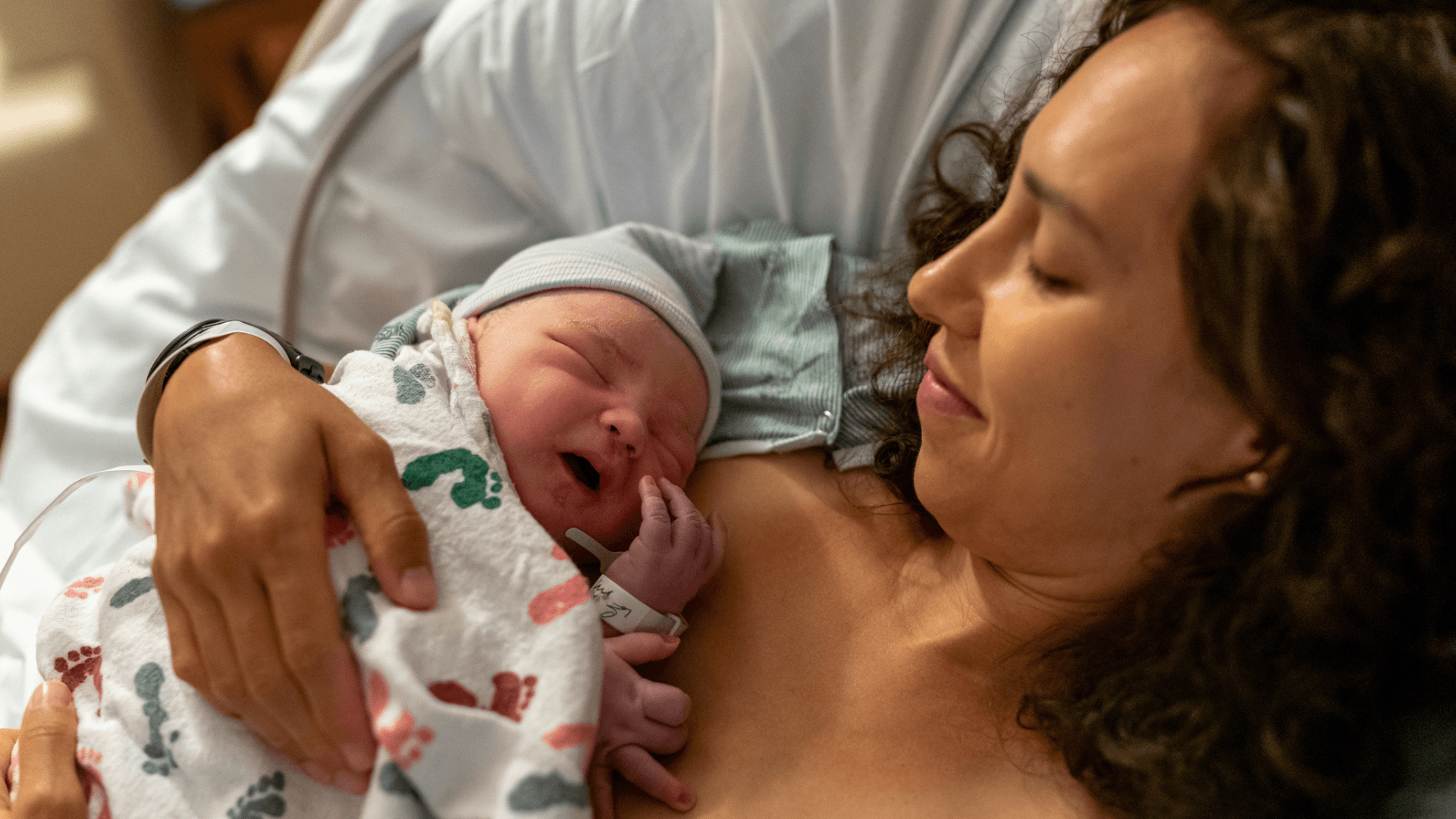
1. Hire overnight postpartum care
An overnight postpartum doula comes into your home at night, takes care of you and your baby, and helps you get more sleep — even if you are breastfeeding. She brings the baby to you for feeds if you are nursing or pumping and is trained to triage common challenges new parents face in these areas; otherwise she handles the bottle. She manages diapers, soothing, and any nighttime fussing in between. You wake up rested. She leaves a written log of the night before she goes home in the morning. You parent your baby better the next day. Repeat.
Most families hire overnight care because they want more sleep, and they get it. What surprises them is the second thing that comes with the sleep: their mental health holds.
PMADs are not caused by one bad night. They are correlated with sustained sleep loss across weeks and months. New parents who get one or two or more stretches of consolidated sleep a week, every week, in the early postpartum period are meaningfully better protected from the kind of accumulated exhaustion that mood disorders feed on.
Overnight care does not prevent mood disorders. It does not replace therapy. What it does is buy you the rest and the bandwidth to notice if something more is going on and to act on it.
Why six weeks is the minimum
Anything less stops right when sleep loss compounds and PMADs are most likely to surface. After years of doing this work, we have learned that families who book only two weeks of overnights almost always regret it. They are not finished recovering at week two. The hardest stretch has barely started. Six weeks is the floor for the kind of recovery overnight care is designed to support.
What to look for when hiring overnight postpartum care
If you are in San Diego County, Doulas of San Diego does this best. If you are anywhere else, ask the questions and trust your gut on the answers.
2. Strategically build your parental leave plan to maximize your time and pay
Parental leave in the US isn't one benefit, or even a few. It's a patchwork of more than a dozen overlapping, complicated programs, and most parents have no idea what they qualify for, how those benefits stack together, or how to apply. They ask HR. They ask their manager. They ask their doctor. And they usually walk away more confused than when they started. In this system, you have to be your own advocate.
A few things to get clear on before your leave starts:
Know what you actually qualify for. And if HR tells you that you don't qualify for something, push back. A lot of parental leave benefits have no minimum tenure requirement, meaning you could be eligible on day one of a new job. HR gets it wrong more than you'd think.
Know how to ask for a disability extension if you need one. Standard postpartum disability is six weeks for a vaginal delivery or eight weeks for a C-section, which, if you've ever had a baby, you know is not a lot of time. If you're experiencing any complications — from postpartum depression or anxiety to carpal tunnel — you may qualify for additional paid, job-protected time off to recover.
Don't assume your leave will look like anyone else's. Your work friend's leave, your sister's leave, even your own last leave — none of it is a reliable blueprint. Every leave is shaped by your employer, your state, your delivery, your recovery, and a dozen other factors. State benefits are constantly changing, companies are cutting parental leave policies, and we don't know what your recovery will look like until you are actually recovering. The only way to know what your parental leave will look like is to map your own unique situation.
Hello Bundle is the only nationwide parental leave consulting agency that puts you and your leave goals first. If you have any parental leave questions, join one of our free intro calls.
3. Find a therapist who specializes in perinatal mental health
Ideally, establish care before baby is born.
Perinatal mental health is its own specialty. A therapist who is excellent with adults in general may not be the right person for the specific patterns of postpartum depression, anxiety, OCD, intrusive thoughts, or postpartum PTSD.
There is a credential to look for: PMH-C — Perinatal Mental Health Certified — through Postpartum Support International. This is the credential we look for when we refer.
Get the appointment on the calendar before baby comes. By the time you realize you need care, you're in the middle of it and might not be in a position to call insurance, search a database, vet ten therapists, and book weeks in advance. If a name and an appointment are already on the calendar, the call to keep it or cancel it is a much smaller decision than the call to find a therapist from zero.
If there is any history of depression, anxiety, or trauma in your background, the case for doing this before baby is even stronger. You may not need the appointment. But if you do, the work of finding it is already done.
4. Find a pelvic floor physical therapist
Pelvic floor physical therapy is one of the most underused resources in the postpartum period, and one of the most misunderstood.
Pelvic floor PTs are licensed physical therapists with additional certification in the specific demands of pregnancy, vaginal birth, and belly birth recovery. They handle scar tissue work after a cesarean. They handle core rehabilitation. They handle the strange new normals of a body that has just grown and birthed a human, regardless of how that human came out.
They are also frequently covered by insurance, which makes them one of the few postpartum specialists most families do not have to pay out of pocket for.
How to find a postpartum pelvic floor PT
- Ask your OB, midwife, or pediatrician for a referral. Many will have a name they trust.
- Look for a PT who specializes in perinatal care, not generalists who occasionally see postpartum parents.
- Check what your insurance covers for outpatient physical therapy before you book. Most plans cover a set number of visits per year.
- Schedule the first appointment for the postpartum checkup window, when most providers clear you for return to activity. If something feels off before then, call sooner.
If you have a complicated recovery — an infected incision, a difficult tear, prolapse symptoms, leakage, or pain — this is not a "wait and see." Get on the calendar.
5. Write a postpartum plan
We hear so much about the importance of writing a birth plan. Almost no one writes a postpartum plan.
A birth plan covers roughly 18 to 36 hours. A postpartum plan covers the weeks and months that follow.
The point of a postpartum plan is not to control how the postpartum period goes. The point is to remove every decision you can from a sleep-deprived parent at 2 a.m.
Next steps
Join us live on May 27
We are running a free workshop on Wednesday, May 27, 2026, where we go deeper on every one of these. Kelly will walk through what the early postpartum period actually looks like and how to plan for the weeks at home. Linzay will walk through the leave landscape and how to find money and time most parents did not know was available. And Dr. Ivy Colbert of Empower Physical Therapy and Embody will walk through how a pelvic floor therapist can be a game-changer in your childbirth recovery. We open the floor for live questions.
Everyone who registers gets a copy of our Postpartum Planning Template — a customizable guide that covers your parental leave plan, feeding plan, mental health plan, approved visitor list, supplies checklist, and more.
Join us live and you'll also get access to Hello Bundle's Parental Leave Planning Playbook for free, which breaks down exactly what you qualify for, tips on sharing your leave plan with HR, and how to make sure you're getting every day and dollar you deserve.
Sign up for the live workshop here.